
How to pick the height of a retro arcade machine for the home
A retro arcade machine for the home comes in four heights on our floor, and the room picks the height more often than the game does. Here is how we size one up.
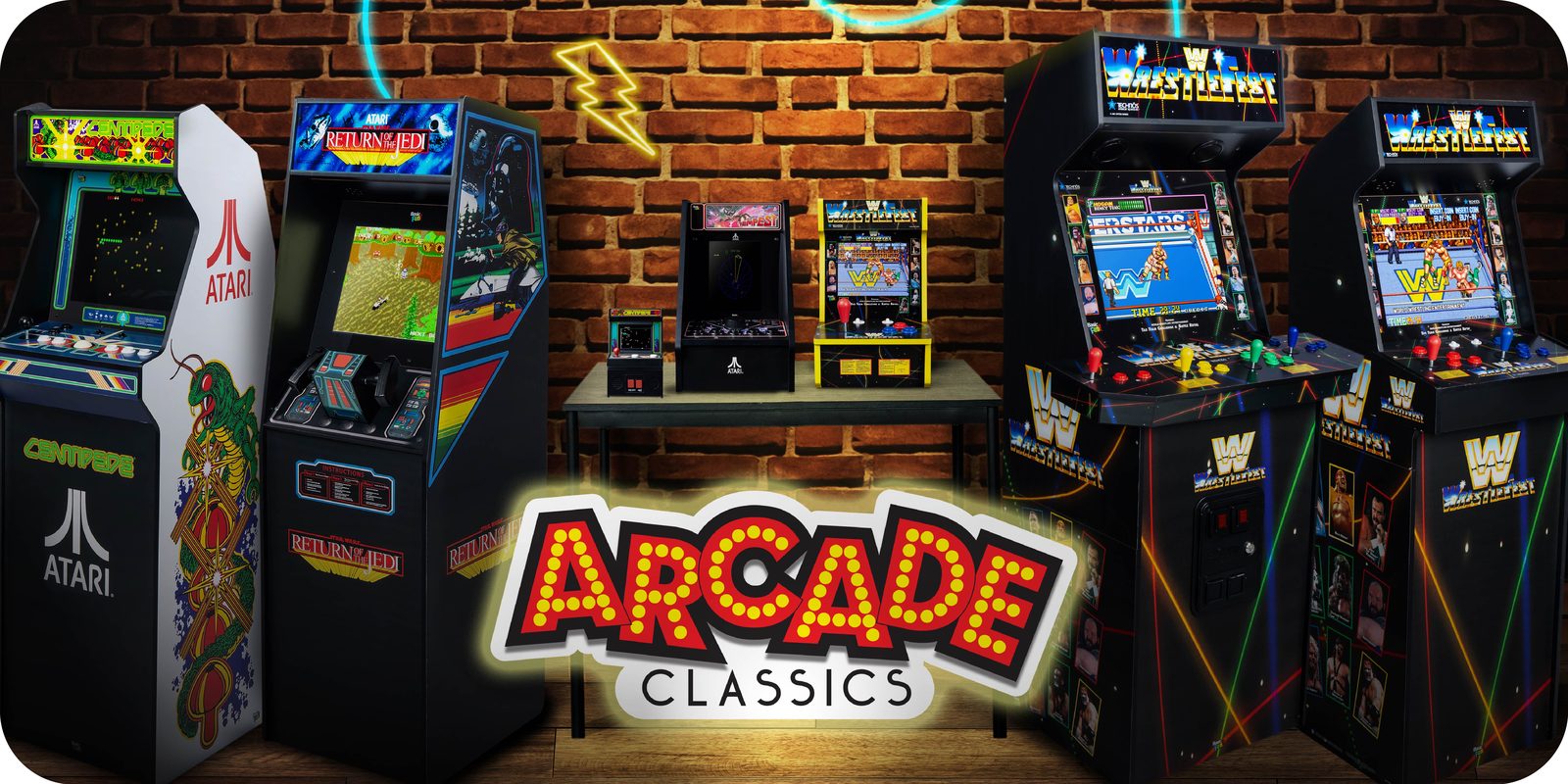
61 inches — the cabinet you walk up to
Ultra Series stands on its own base with a 17-inch screen at chest height and a lit marquee above it. It changes the room it lands in, which is both the appeal and the thing to measure for. Allow a metre of clear floor in front: the Star Wars yoke needs to be pulled back, and the WWE panel needs a shoulder free on each side for two players. Keep it off a thick rug edge so the base sits flat.
37.5 inches — the junior cabinet
Junior Series keeps the free standing shape at a height a child stands at comfortably. You get the base, the marquee and an 8-inch vertical screen, plus three difficulty modes so the first game ends in a cleared maze. It arrives flat and goes together on the carpet in about twenty minutes with one screwdriver.
16 inches — the counter row
Counter Series is built for a bar top, an island or a desk. The trackball cabinets want the most room of the three because a roll is a whole-palm movement; the Tempest spinner needs almost none. Leave an inch behind the cabinet for the adapter lead and check the surface will not slide under a fast game.
6 inches — the pocket cabinet
Handheld Series is a cabinet shrunk, not flattened: marquee, colour screen, real joystick, clicking buttons. It needs no floor at all and three AA batteries come fitted. If the honest answer is that nobody in the house will walk across a room to play, this is the height that actually gets used.
Two numbers worth writing down
Measure the width of the surface and the depth of clear air in front of it. Those two beat every other specification, because a cabinet that does not fit gets moved, and a cabinet that gets moved stops being played. Once the height is settled, pick by control and by games — our aisles are sorted that way on purpose.
Matching a retro arcade machine for the home to the room you have
Height decides everything else. A 61-inch arcade cabinet is furniture and needs a wall, a flat floor and a step of space in front of the player. A 16-inch mini machine is an object and needs a surface at elbow level. Get that the wrong way round and a good game becomes a chore, which is the single most common reason a machine stops getting played. Measure the room before you choose the title, every time.
Clearances nobody puts on a spec sheet
Allow 60 centimetres in front of a full-height cabinet for a single player and a metre for two, because elbows travel further than feet. A flight yoke wants the deepest clearance of any control we build. On counters, allow an inch behind for the adapter lead and keep the panel clear of a tap. Check the swing of a door before you commit a corner: the classic mistake is a cabinet that fits the wall and blocks the room.
Power, lighting and noise
Full-height and counter machines run off an AC adapter into a standard socket, so no coin-operation and no special supply. The marquee is LED lighting, which means it is cool to the touch and bright enough to be the only lamp at that end of a game room. Handhelds take AA cells. Volume is adjustable on everything we build, and the thing to remember is that the attract loop plays whether or not anyone is in the room.
Upgrading a room that already has a screen
A television gives a room entertainment to sit down for. A cabinet gives it a reason to stand up. If you are upgrading a game room, the order that works is cabinet first, seating second, because people do not sit at an arcade machine. One full-height cabinet and one counter machine covers more ground than two of either, and the variety is what turns a corner into a floor rather than a display.
What you are really choosing between
A retro arcade machine for the home is one of the few purchases where the room decides more than the taste does. Our collection is four heights of the same arcade cabinet, and every one of them is a licensed, authentic build with the same quality of panel: the 61-inch Ultra Series, the 37.5-inch Junior Series, the 16-inch Counter Series and the 6-inch Handheld Series. We do not take custom orders and we do not build pinball, which keeps the choice simple. The ultimate version of the experience is the full size floor cabinet, because standing up changes how an arcade game feels, and a lit marquee overhead does something that a screen on a desk cannot. But a premium floor machine in a room with no space for it is a worse purchase than a mini one that gets played. Explore the three aisles with a tape measure open and the decision usually makes itself inside five minutes.
Heights, rooms and the people in them
Game rooms are the easy case: a 61-inch cabinet, a metre of floor, a socket, and the entertainment is endless because nothing we build is coin operated. Home bars and kitchen islands want the 16-inch counter edition, where the surface supplies the height and the machine supplies the action. A child's bedroom wants the Junior Series, a durable free standing build that goes on the floor at a child's own height, with three difficulty modes so a kid finishes a level rather than a life. A bag wants the handheld, compact enough to be forgotten about and still delivers thousands of turns on three AA cells. The nostalgia is the same at every size, because the boards are the same original titles from the 80s and 90s; what changes is the posture, the lighting and whether friends can crowd round it. Check the surface, check the plug, then pick the board.