
Setting up a game room around a retro arcade machine for the home
A retro arcade machine for the home needs about a metre of standing room, a socket and light that misses the screen. The rest of the game room follows from that.
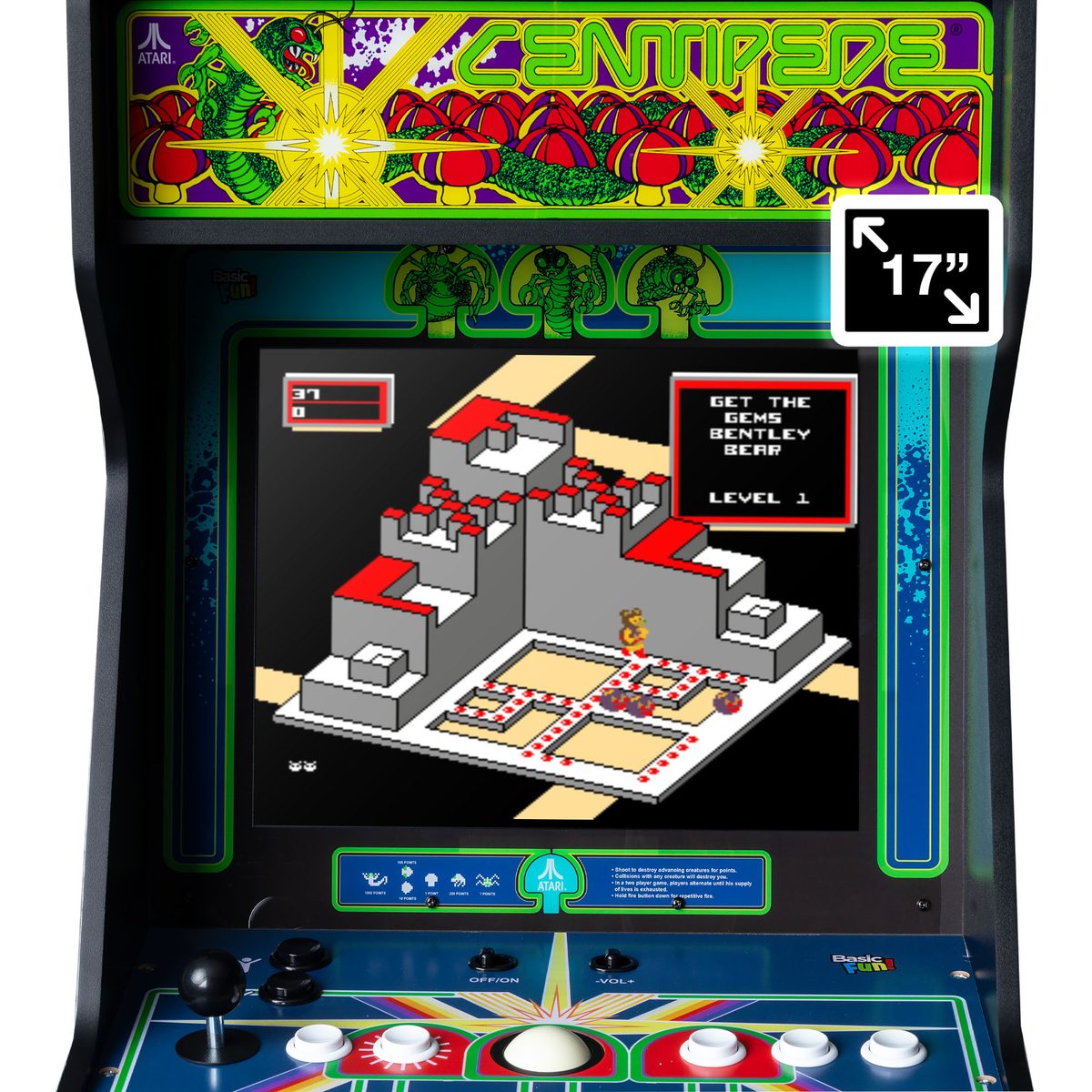
Assembly — one screwdriver, no wiring
Floor and counter cabinets arrive flat with the panel, screen and marquee already wired into the head. You join the body, seat the head, run the adapter lead out of the back and plug in. Work on carpet rather than tile so nothing scuffs, and keep the fixings in the tray they came in until the last panel is on.
Power — one socket, nothing clever
Every floor and counter machine runs off the AC adapter in its box. One free socket is all it asks. Handhelds use three AA batteries, fitted at the factory on the models that include them. There is no account to make, no firmware to fetch and no update that can take a game away later.
Placement — light before looks
Put the screen at right angles to the brightest window in the room, not facing it. Liquid crystal panels are bright, but a direct reflection beats brightness every time. A marquee reads best with the room lights down, so a corner that can go dim is worth more than a corner that looks good in daylight.
Floor and surface — stay level
A 61-inch cabinet wants flat floor, not the edge of a rug: a base that rocks under a hard game feels cheap and loosens fixings. On a counter, check the surface will not slide before you put a trackball cabinet on it. An inch of clearance behind keeps the adapter lead from being pinched.
Two players, one room
If two people are going to play, buy for the panel and not the price. Our WWE Ultra cabinet gives both players their own stick and buttons on one screen. On single-stick cabinets, plan for turns — which is more fun than it sounds once a score board exists, and a reason to keep a pad and pencil on top of the cabinet.
Building a game room around a retro arcade machine for the home
Game rooms go wrong in a predictable way: everything faces the television and the cabinet ends up in the corner nobody stands in. Put the arcade machine where people walk, not where there is space left over. A cabinet is the only piece of entertainment in the room that has to be approached, so it earns the spot by the door. The rest of the layout can be built around that one decision.
Light, sound and floor
Keep overhead lighting off the screen and let the marquee do the work: a lit cabinet in a dim room is most of the arcade experience. Hard floor beats a thick rug, because a rug edge under one castor is what makes a 61-inch machine rock. If the room has bare walls and a tiled floor, drop the volume a notch, as the original cabinet speakers were tuned for a noisy arcade and a quiet modern room makes them sound harsh.
Seating, bars and counters
Nobody sits at a full-height cabinet, so seating is for the people waiting. Two stools beside the machine does more for a game room than a sofa facing it. A home bar is the natural place for a counter cabinet: elbow height, a hard top and somewhere to put a glass down. Our Counter Series was built for bars specifically, which is also why the base is weighted for a trackball.
A room that holds up over the years
Leave access behind each cabinet, keep the leads tied off the floor and give yourself room to open a panel. A game room is one of the few spaces in a house that improves by combining old and new rather than matching, so a 1983 cabinet shape next to a modern screen looks deliberate instead of mismatched. Thousands of rooms later, the ones that still get used are the ones where the arcade machine is the first thing you reach, not the last.
What a game room actually needs
A retro arcade machine for the home needs less than people expect: about a metre of standing space in front of it, a socket within reach of the cable, and light that does not fall straight onto the screen. Everything else is preference. Our classic full size cabinets are 61 inches of durable premium build with their own marquee lighting, so a dim corner suits them better than a bright one; the 16-inch counter editions borrow their height from the surface and fit a home bar without a rebuild. Because nothing we make is coin operated, there is no coin box to empty and no running cost, which is what makes the entertainment endless rather than metered. We do not take custom orders and we do not build pinball, so planning a room around our collection means planning around four known footprints and nothing more complicated than that.
Combining machines without crowding the room
Two machines is a game room; four is a floor. The trick is variety of control rather than variety of cabinet: a trackball machine, a spinner and a stick give three kinds of action and keep everyone in the house on something different, where three identical builds just take up space. Put the arcade games with the longest sessions where a player can lean, and the mini machines where someone passing through will pick one up. Leave the licensed floor cabinet room to open on both sides if you ever want to look inside it. Flooring matters more than it sounds: a hard surface keeps a high cabinet stable and a thick carpet does not. And keep one chair out of the way, because the nostalgia of standing up to play is most of the reason the cabinet is there at all.