Mini Classics · 5.5 in tall
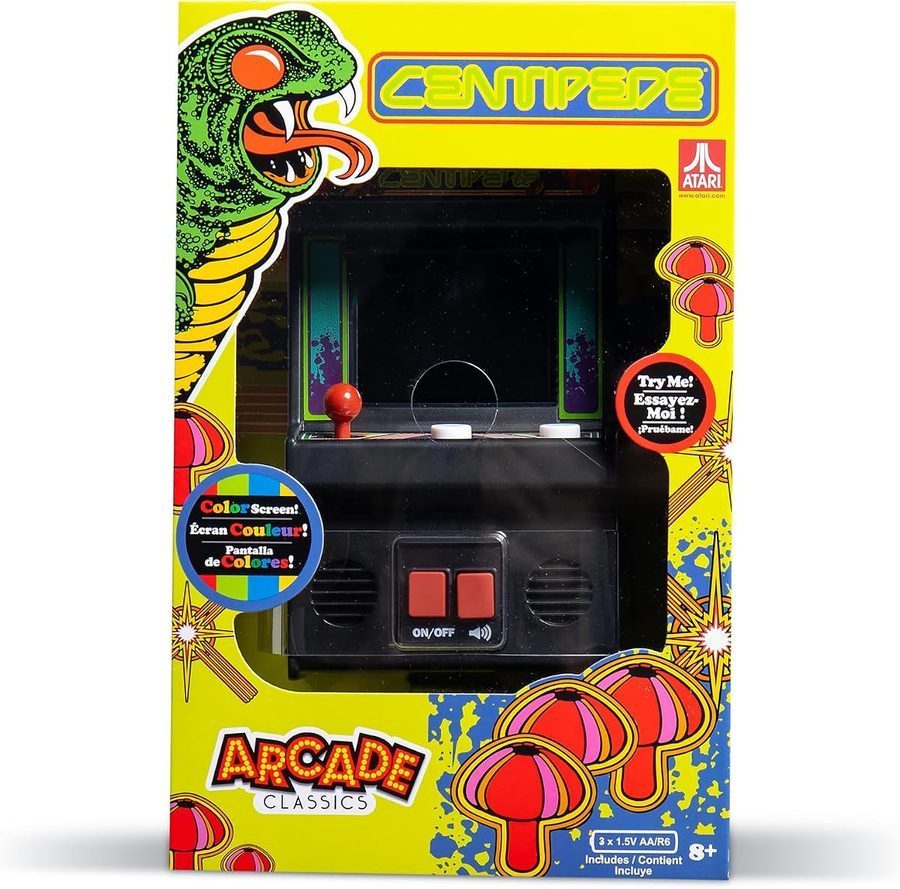
Centipede and Q*bert Mini Arcade Two-Pack
3.3 of 527 player ratings
$53.18set at checkout in our listing
Two mini cabinets in one box — Centipede in one hand, Q*bert in the other.
Our marquee is lit — every cabinet on the floor plays the original board, not a browser copy.
6 cabinets on this aisle
Six inches of cabinet with a working joystick, a full colour screen and the original music. We shrank the shape rather than flattening it, so what lands in a coat pocket still looks like the machine it came from.
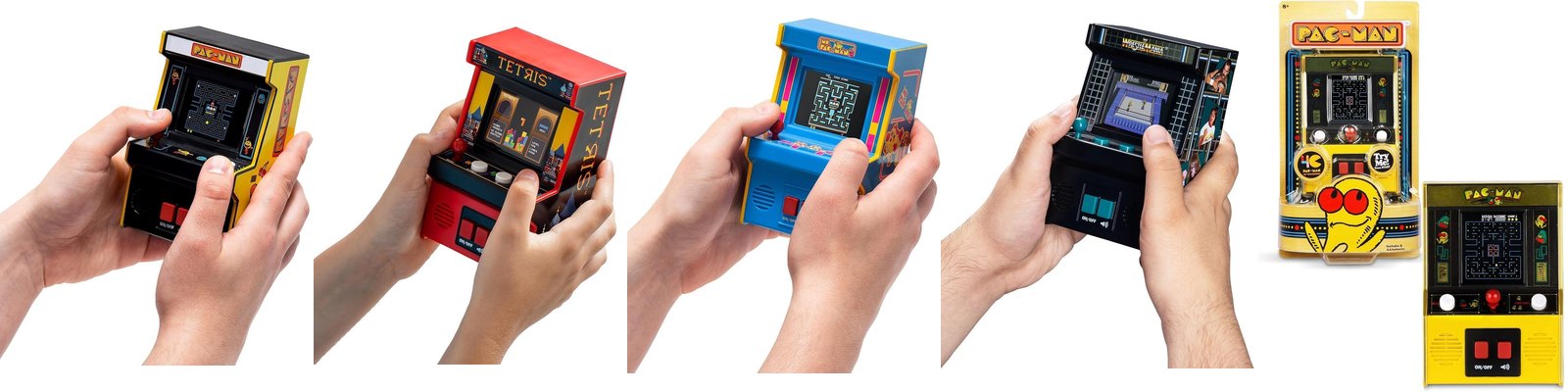
Mini Classics · 5.5 in tall
3.3 of 527 player ratings
$53.18set at checkout in our listing
Two mini cabinets in one box — Centipede in one hand, Q*bert in the other.
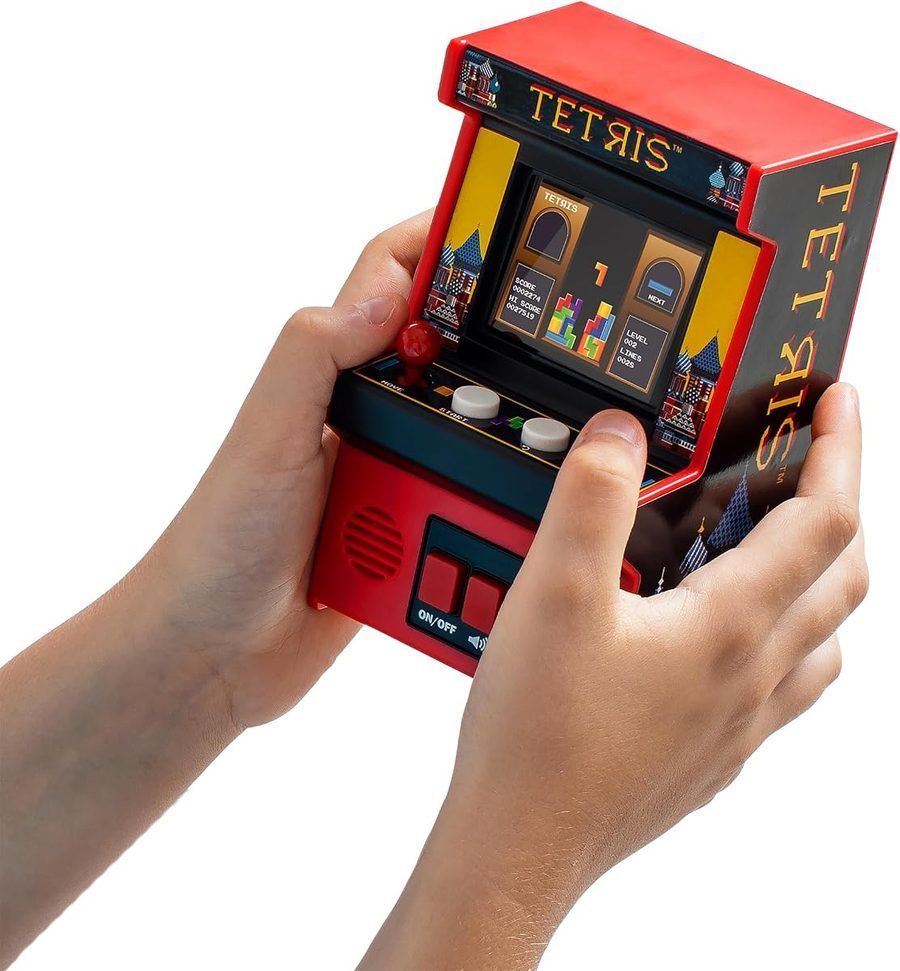
Handheld Series · 6 in tall
4.6 of 5260 player ratings
$24.97set at checkout in our listing
Tetris on a 6-inch cabinet with a real stick, Marathon mode and a full colour screen.
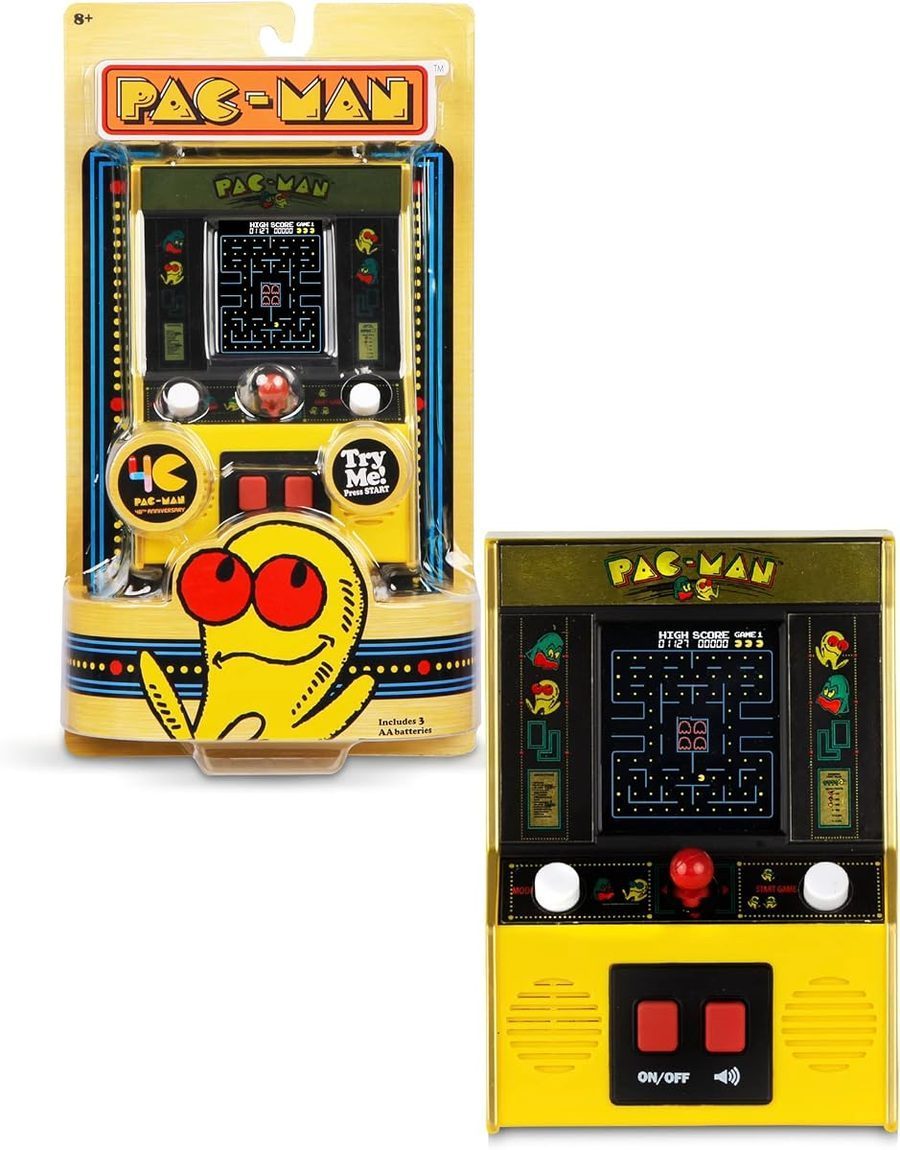
Gold Label · 5.5 in tall
4.2 of 52759 player ratings
$21.52$24.69set at checkout in our listing
Pac-Man in the 40th Anniversary Gold Label housing, with a brighter panel and room for a second player.
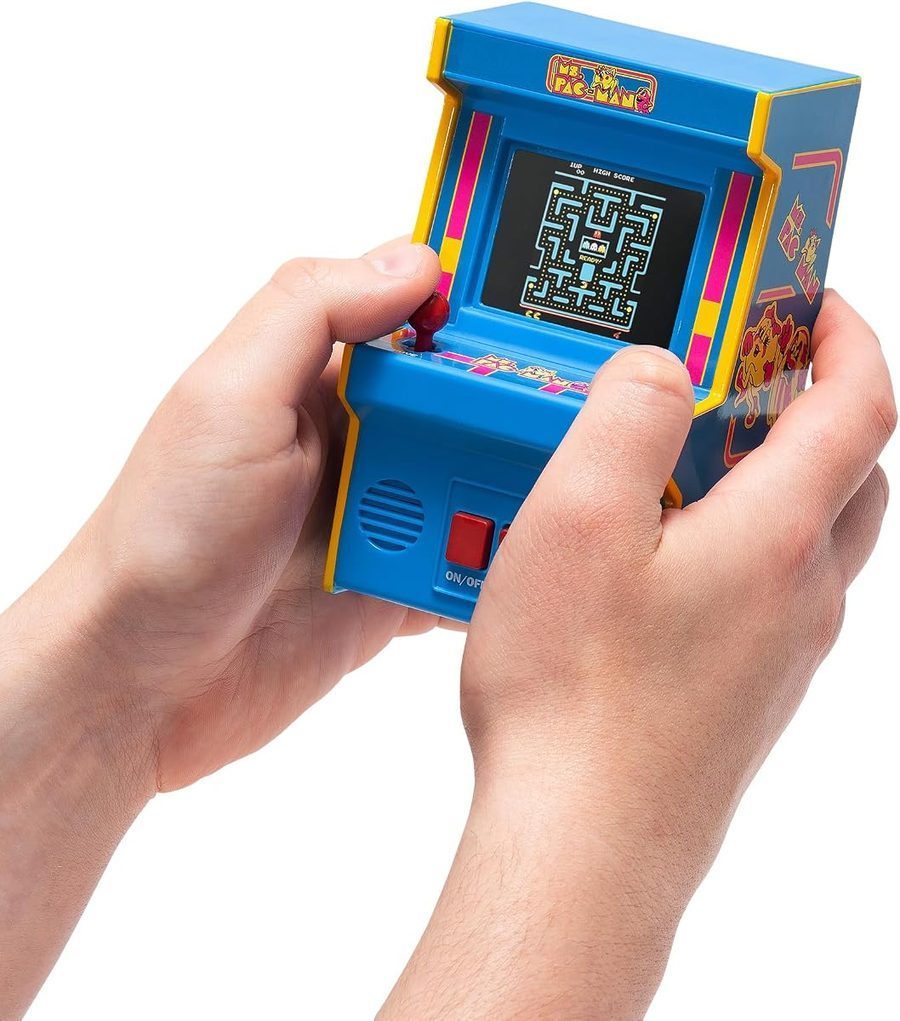
Handheld Series · 6 in tall
4.6 of 565 player ratings
$21.23$24.97set at checkout in our listing
Ms. Pac-Man on a 6-inch cabinet with her own four mazes and three AA batteries fitted.
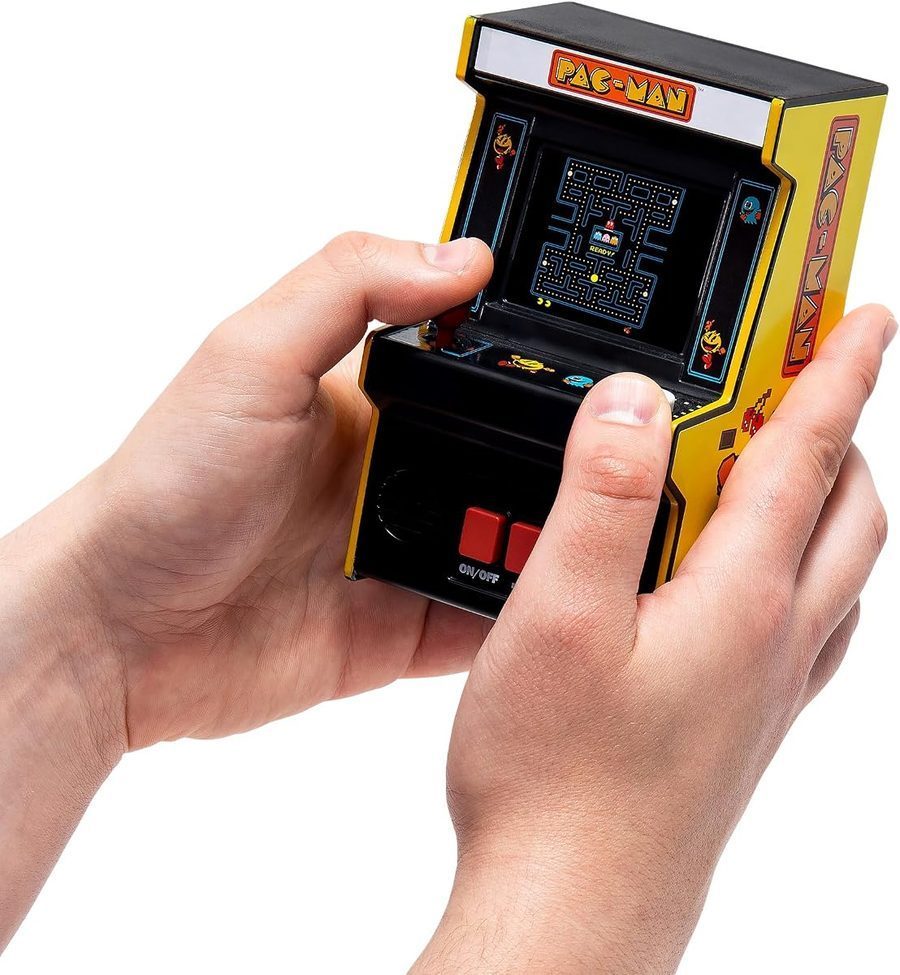
Handheld Series · 6 in tall
4.5 of 5686 player ratings
$21.22$24.97set at checkout in our listing
The original maze on a 6-inch cabinet, full colour screen, the siren still looping.
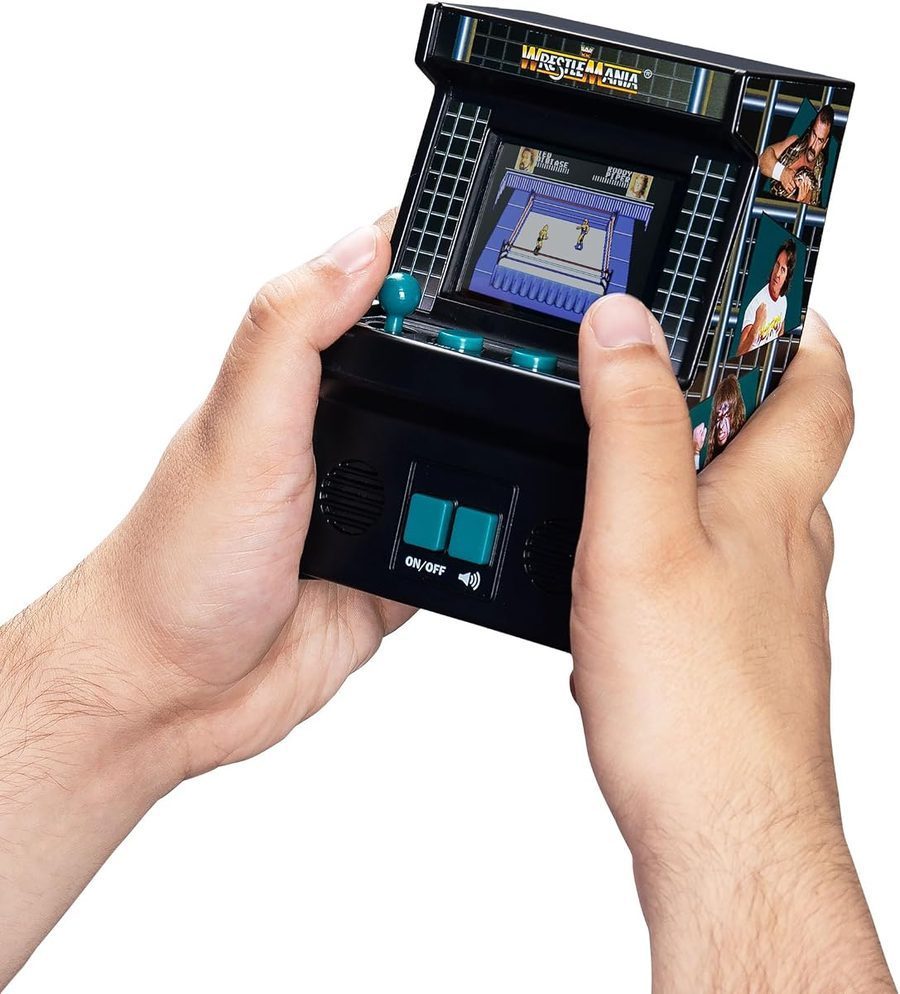
Handheld Series · 6 in tall
4.2 of 569 player ratings
$17.99set at checkout in our listing
Ten WWE Legends in a steel cage on a 6-inch cabinet, batteries in the box.
One title each, played properly. Pac-Man and Ms. Pac-Man run their own mazes and their own ghost patterns. Tetris adds Marathon mode, ten lines a level, speed climbing until your stack does. The WWE mini puts ten Legends in a steel cage. The Gold Label Pac-Man carries the 40th Anniversary housing with a brighter panel and room for a second player to take a turn.
The stick is the point. A microswitch joystick under your thumb beats a glass swipe at every maze corner, and the buttons click loud enough that the person beside you knows exactly when you lost the life.
Three AA batteries come in the box on the handhelds, so the first game starts in the car park rather than at home. They are the cabinets we hand to someone who says they do not play games — the stick usually settles that argument inside a minute.
Six inches of cabinet with a working joystick, a full colour screen and the original music. This is the retro arcade machine for the home that also leaves the home: a mini arcade game small enough for a coat pocket, a glovebox or a desk drawer, built to the same shape as the 61-inch machines rather than flattened into a slab. We shrank the cabinet, not the idea. What lands in your hand still has a marquee, a bezel, a control panel and a coin door moulded into the front where the slot used to be.
Pac-Man and Ms. Pac-Man run their own mazes and their own ghost patterns, not a shared engine with different sprites. Tetris adds Marathon mode, ten lines a level, speed climbing until your stack does. The WWE mini puts ten Legends in a steel cage. The Gold Label Pac-Man carries the 40th Anniversary edition housing with a brighter panel. The two-pack pairs Centipede with Q*bert, which is a lot of classic arcade for the money and the most featured item in this part of our collection.
The stick is the point. A microswitch joystick under your thumb beats a swipe at every maze corner, because your thumb knows where the gate is without looking and a sheet of glass never tells you anything back. The buttons click loud enough that the person beside you knows exactly when you lost the life. That tactile touch is the whole argument for a mini arcade cabinet over an app, and it is why these are the machines we hand to someone who says they do not play games. The stick usually settles that argument inside a minute.
At 6 inches and a few hundred grams, a handheld lives wherever you leave it: a bedside table, a car door pocket, the side of a laptop bag. Three AA batteries come in the box, so the first game starts in the car park rather than at home. The 5.5-inch Gold Label and Mini Classics builds are smaller again and take two. Nothing here needs a plug, a stand or a cleared surface, which makes the compact end of our range the easy answer when floor space in the game room has already run out.
These are the ones we see given most. The price is a stocking filler, the shape is instantly readable across a room, and there is no setup to ruin the moment: unscrew the battery door, drop three cells in, and the attract loop starts. We have had people tell us they bought one for a kid and then bought a second because the adults in the house would not give it back. Nostalgia does half the work; the gameplay does the rest. For a quick present to someone of any age, this is the row to explore first.
A 2.5-inch colour panel sounds unpromising until you see a maze on it. These are games drawn for low resolution in the first place, so authentic sprite art at this size looks sharp rather than stretched, and the original palette survives intact. We keep the bezel deep and matte so daylight does not wash the picture out on a train. The speakers are small and honest: you get the real waka-waka and the real line-clear sound, at a volume that will not clear a quiet carriage.
A machine that travels gets treated like luggage. The shells are moulded in one piece with the artwork printed under a clear layer instead of stuck on top, the stick is anchored to the chassis rather than the face plate, and the battery door takes a screw so it does not pop open in a bag. Durable at this size is mostly about having no seams to split. It is a modern approach to a timeless shape, and it is why a two-year-old handheld still looks like it came out of the box last week.
We are a family business building arcade machines, and this is the end of the range where we get the most letters. What we can answer is what is on the board, how long the batteries last and what the panel looks like in daylight. What we cannot answer is where your parcel is. Order status, delivery, warranty and returns all run through the order page of the partner store you bought from. Check that page first and you will get a real answer faster than we could give you one.
A mini arcade machine has one job: deliver the original arcade game in a form that fits a bag, and do it without turning into a toy. Ours are designed as compact miniatures of the full size cabinets rather than pads with a screen, so each one has a working joystick, real arcade buttons, a backlit marquee and an official licensed board. They run on three AA cells, which means no socket, no account and no coin-operation of any kind, and the power lasts long enough that nobody thinks about it. The quality of the stick is the single thing that separates a machine you keep from one that ends up in a drawer; it is the part we spend the most engineering on and the part most people never notice. There is no pinball and no custom work in this row — just a small, fixed collection of titles we could licence properly.
Three kinds of player, mostly. The one combining nostalgia with a commute, who wants the memory of a 90s arcade on a train. The one buying a first present for a kid, where the excitement of a cabinet matters more than the size of it and nothing needs a plug or permission. And the one exploring whether a bigger machine is worth the space, using the cheapest handheld as the test. For all three the appeal is the same: an authentic board, high difficulty left intact, endless free turns rather than a jar of quarters, and a cabinet that looks like the real thing on a shelf. If a handheld catches on, the upgrading path runs through the 16-inch counter row — where Centipede gets a real trackball and the lighting gets a proper marquee — and then to the premium 61-inch floor cabinets in our game room aisle, where friends can stand round it.
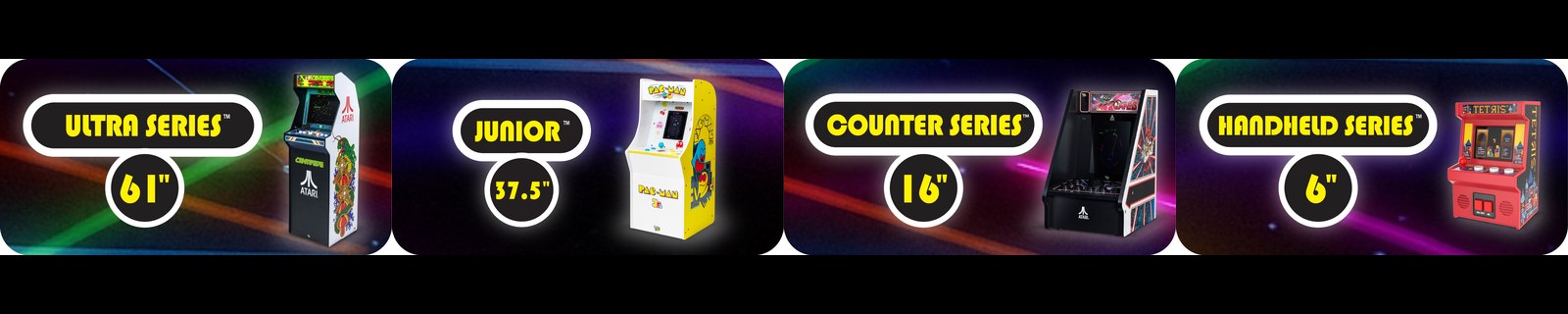
Pick the height, we already loaded the games. Our listing shows what each cabinet costs today and when it ships.